The Small Business Owner Guide to Field Service Automation in 2026 (Without Enterprise Budgets)
Author: Warren Peterson
Category: Operations
It’s 2026. Your HVAC tech is still calling the office for the gate code. Your plumber just drove across town for a part he could’ve grabbed this morning. Your electrician showed up to a job without knowing the customer’s breaker panel was replaced last year.
This isn’t an enterprise problem anymore. It’s a small business survival problem.
Field service automation used to mean six-figure software contracts and dedicated IT staff. Not anymore. The tools that Fortune 500 companies built their operations on are now available to your three-person plumbing crew or five-tech HVAC shop.
Here’s what you actually need to know.
Why Automation Isn’t Optional Anymore
We’re not talking about robots replacing your techs. We’re talking about eliminating the chaos that’s costing you money every single day.
Route optimization stops the bleeding. Your techs are burning fuel driving in circles because they’re following the order jobs came in, not where customers actually live. Automation clusters appointments geographically. Less windshield time. More billable hours.
Information gaps kill profitability. When your technician arrives without knowing the customer asked for specific parts, prefers text notifications, or needs a gate code: that’s a wasted trip. Automated dispatching puts complete job context on their phone instantly.
First-time fix rates matter. If your tech has to come back for parts, you’re paying for that drive twice. Smart inventory systems predict what parts you’ll need before the job even starts.
This is measurable stuff. Not theory.
Start With What Actually Moves the Needle
Don’t try to automate everything on day one. Start with the features that give you immediate ROI.
Smart scheduling and dispatching means the system assigns jobs based on who’s qualified, who’s closest, and who’s available. Your junior tech doesn’t get sent to a complex commercial repair. Your senior tech doesn’t waste time on basic service calls.
Route optimization calculates efficient driving sequences. No more zigzagging across town. Your techs fit more jobs into each day without working longer hours.
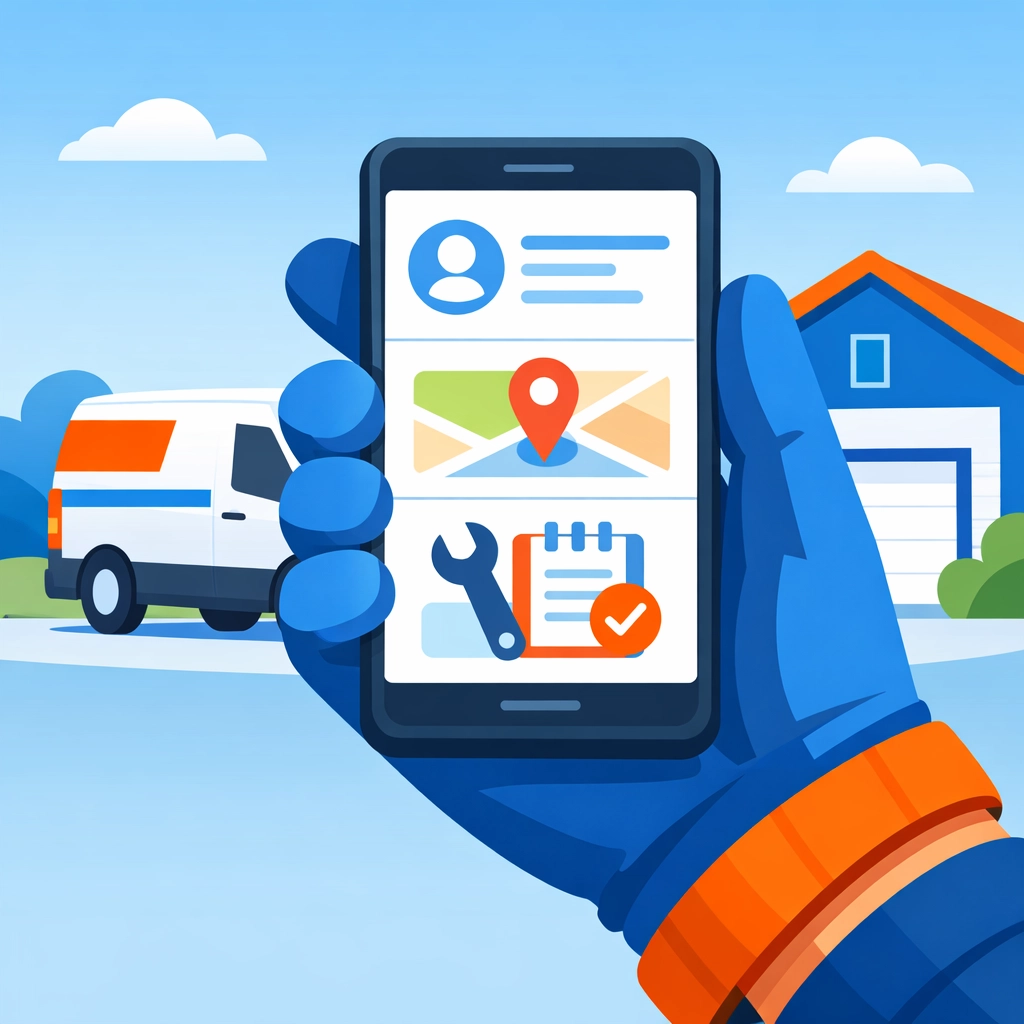
Mobile access gives technicians everything they need on their phones. View schedules. Update job statuses. Take photos. Log materials. Capture signatures. Process payments. Even when cell service is spotty, offline mode keeps them working.
Automated messaging handles the repetitive communication. Appointment confirmations. 24-hour reminders. Post-job follow-ups. Payment notifications. All automatic. No more playing phone tag.
Integrated inventory management tracks tools and parts in real-time. You know what’s on each truck, what’s in the warehouse, and what needs reordering before you run out.
That’s it. These five capabilities solve 80% of your operational headaches.
The Budget-Conscious Implementation Plan
You don’t need enterprise budgets. You need smart rollout.
Start with one high-impact feature. Pick automated appointment reminders or route optimization. Get that working smoothly before adding more complexity. Small wins build momentum.
Choose platforms built for small teams. We see too many business owners trying to force-fit enterprise solutions designed for 500-person operations. Look for cloud-based software with fundamental features: real-time job tracking, mobile apps, basic scheduling, payment processing.
Skip the bells and whistles. You’re not managing a national fleet.

Digitize incrementally. Don’t throw out all your paper processes on Monday morning. Start by digitizing job forms and customer signatures. Then move to digital job notes. Then tackle scheduling.
One workflow at a time.
Track metrics from day one. Set up your reporting dashboard to monitor first-time fix rate, job completion time, technician utilization, and customer satisfaction. If these numbers don’t improve within 90 days, your automation isn’t working.
Data tells you the truth.
Getting Your Team to Actually Use It
The best software in the world is worthless if your techs hate it.
Frame automation as support, not surveillance. Your field staff needs to understand these tools eliminate tedious paperwork and phone calls: not monitor their every move. Show them how mobile apps save time on-site instead of adding tasks.
Provide real training. Not a 47-slide PowerPoint deck. Interactive, hands-on sessions where they use the actual features they’ll need daily. Let them ask questions. Address concerns.
Start with your early adopters. There’s always one tech who likes new technology. Get them using the system successfully, then let them show the others how it makes their day easier.
People trust their coworkers more than they trust vendors.

What This Actually Gets You
By integrating these automation tools, you’re building a digital memory of your operations.
You’ll spot patterns. Which customers call most frequently. Which services spike in summer versus winter. Which parts you go through fastest. Which technicians handle certain job types most efficiently.
This data improves decision-making without hiring more office staff.
Reduced operational costs. Less fuel. Fewer missed appointments. Higher first-time fix rates. More jobs per day without overtime.
Faster response times. When customers call, you know exactly who’s available and closest. No more “let me check the schedule and call you back.”
Improved customer satisfaction. Accurate arrival windows. Techs showing up fully informed. Professional digital invoices. Easy payment options.
A foundation for growth. When you’re ready to add another truck or hire more techs, your systems scale without proportionally increasing administrative overhead.
That’s the real value. You build capacity to grow without building a bigger office staff.
The 2026 Reality
Field service automation isn’t new technology anymore. It’s table stakes.
Your competitors are using these tools. Your customers expect the professionalism these tools enable. The cost of staying manual is higher than the cost of adopting automation.
We’re not talking about massive transformation projects. We’re talking about practical tools that solve specific problems your business faces every day.
Start small. Pick one pain point. Automate it. Measure the results. Then move to the next one.
No enterprise budgets required. Just smart decisions about where technology can support the work your team is already doing.
Need help figuring out where to start? We work with small service businesses every day on exactly these challenges. No corporate jargon. No one-size-fits-all packages. Just practical advice for real operations.
Valortek Inc | Business Consulting
Questions? Contact us – we’re happy to help you decide.
Ready to Transform Your Business?
See how Valortek can help you work smarter, not harder