The Simple Trick to Stop Cash Flow Crunches in Your Trade Business (Before Tax Season Hits)
Let’s talk about the thing that keeps you up at night in January and February.
Cash flow.
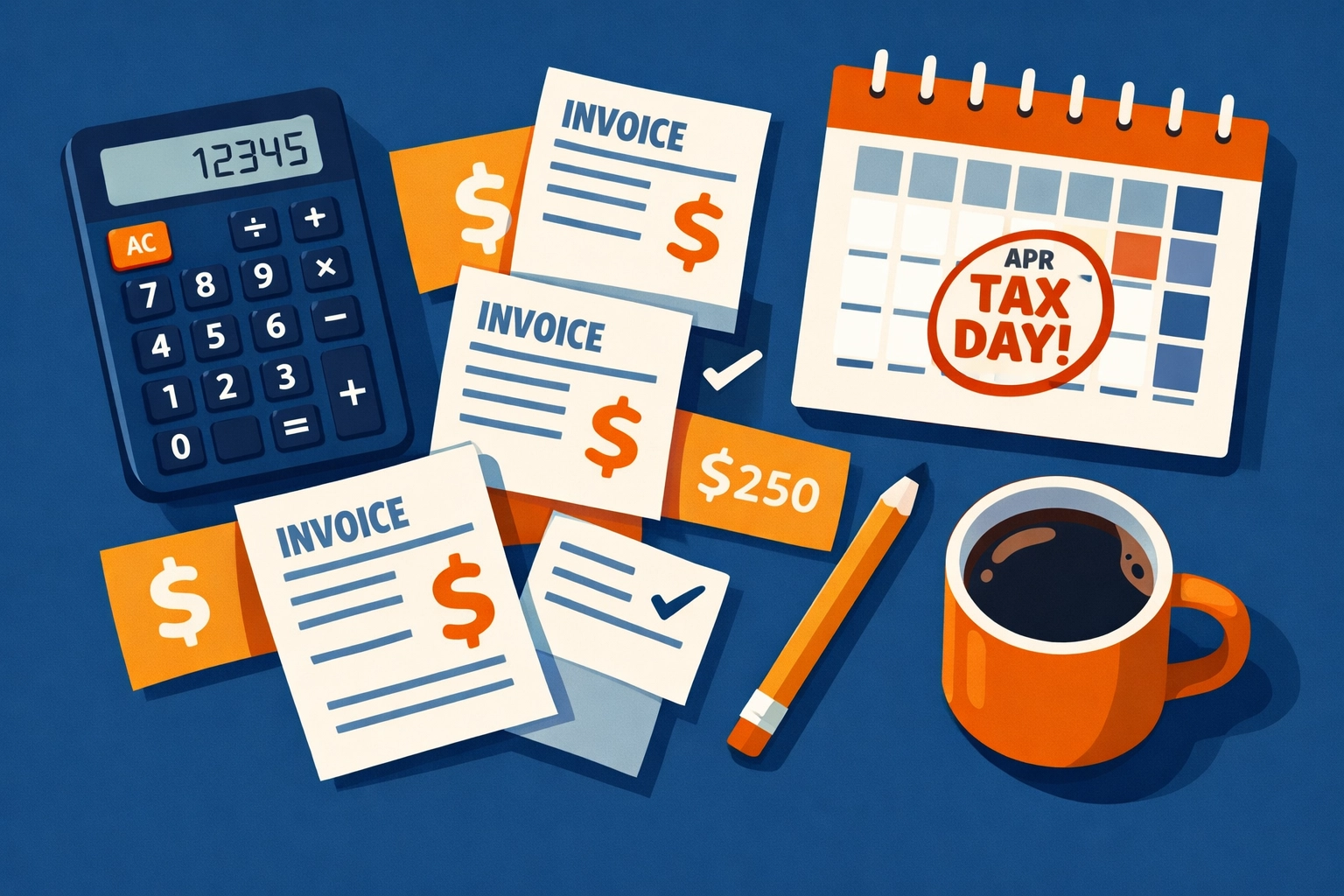
You’ve got jobs lined up. Customers are happy. But somehow, when tax season rolls around, your bank account looks like it got robbed.
It’s not your business model. It’s not your pricing. It’s your deposit strategy.
The Problem with Flat Percentage Deposits
Most trade businesses collect the same deposit on every job. 30% down. 50% down. Whatever number feels right.
Here’s the issue: that number has nothing to do with your actual expenses.
So you end up with too much cash sitting around in summer (which feels great). Then not nearly enough in February when payroll, supplier invoices, and quarterly taxes all hit at once.
The Simple Trick That Changes Everything
Stop collecting flat percentages. Start aligning deposits to your actual expenses.
Here’s what that means in practice.
Calculate the cash you’ll need from the moment you collect that deposit until your next payment arrives. Include labor costs. Materials. Subcontractors. Operating expenses. And yes, your upcoming tax obligations.
That’s your deposit amount.
No guessing. No industry standards. Just math based on your real cash needs during that billing cycle.
How Valortek’s Finance App Makes This Actually Work
Look, this sounds simple on paper. It’s harder when you’re juggling 12 jobs, three crews, and a phone that won’t stop ringing.
That’s where cash flow forecasting comes in.
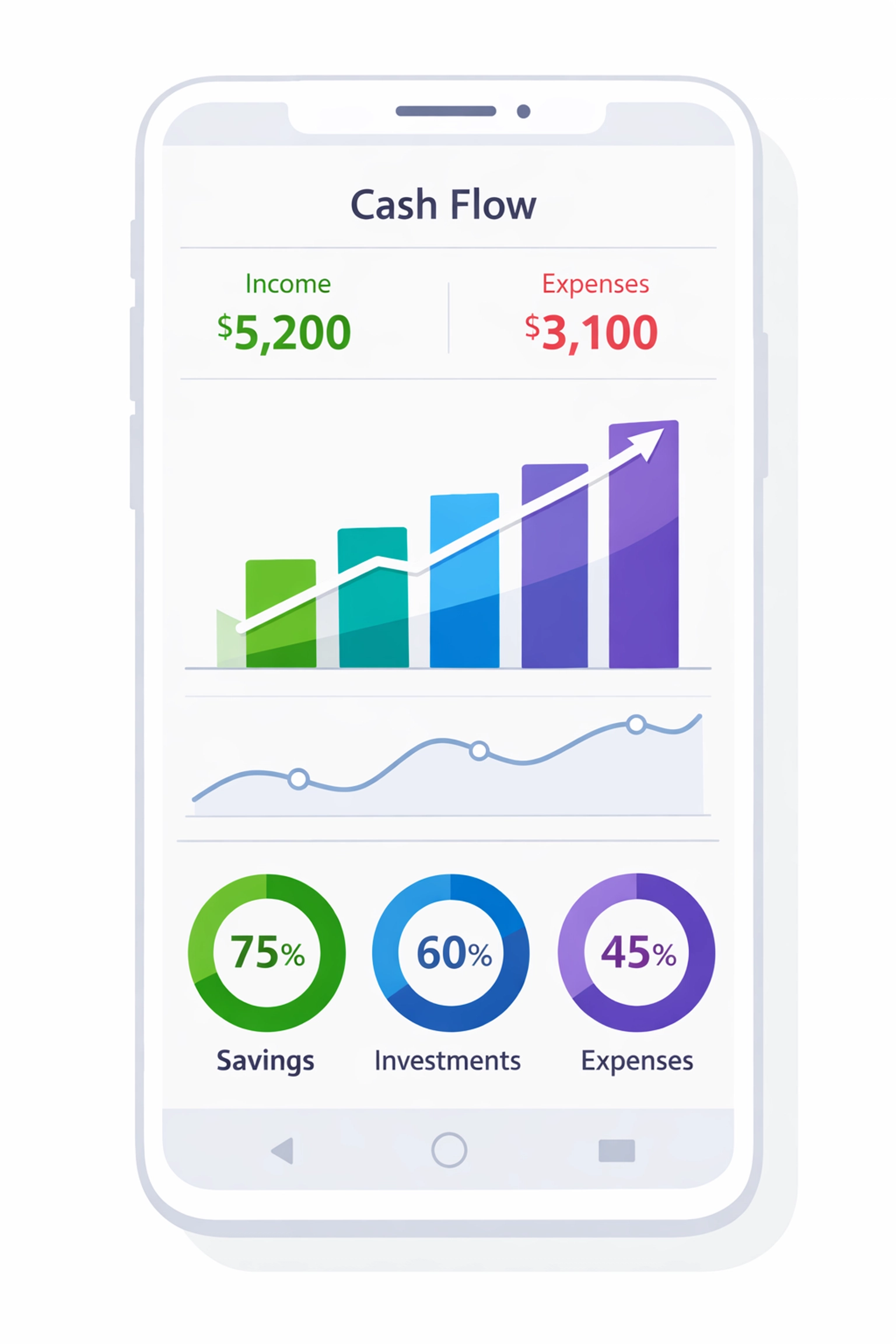
Our Finance app shows you exactly what’s coming in and what’s going out over the next 30, 60, 90 days. You can see the gaps before they become problems. You can adjust deposit amounts on upcoming jobs to fill those gaps.
No spreadsheets. No guessing. Just a clear picture of where your cash actually is.
The budget tracking feature breaks it down by category. You can see if you’re overspending on materials. If labor costs are creeping up. If those “small” operational expenses are actually bleeding you dry.
And the tax planning tool? It calculates your estimated quarterly taxes based on your actual revenue and expenses. So you’re never caught off guard when that payment is due.
Accelerate Your Receivables (Without Being That Guy)
The deposit strategy works even better when you tighten up the rest of your cash flow cycle.
Send invoices the day work is completed. Not Friday. Not Monday. The same day.
Set up automatic reminder emails. Most customers aren’t intentionally avoiding payment. They’re just busy. A friendly reminder gets you paid faster without awkward phone calls.
Consider offering a small discount for early payment. 2% off if paid within 10 days can move the needle more than you’d think.
Or go the other direction. Add late fees to your payment terms. 1.5% per month after 30 days. Most won’t ever see it, but it creates urgency for the ones who might otherwise drag their feet.
The Finance app integrates with your invoicing system. So when a payment comes in, your cash flow forecast updates automatically. When an invoice goes past due, you see it immediately on your dashboard.
Get Strategic with Outgoing Payments
You’re careful about bringing money in. Be just as strategic about sending it out.
Don’t pay bills early unless there’s a real incentive. Use your full credit period with suppliers. That 30-day window is working capital you’re leaving on the table if you pay on day 5.
The key is maintaining good relationships while preserving cash. Pay on time. Just not early.
Our system tracks all your payables. You can see what’s due when. You can schedule payments strategically to maintain cash reserves during critical periods (like, say, tax season).

The Advisor Portal Changes the Game
Here’s something most trade business owners don’t have: real-time collaboration with their financial advisor.
Our advisor portal gives your accountant or bookkeeper direct access to your financial data. Not PDFs. Not exports. The actual live data.
They can see what you see. They can run reports. They can spot issues before they become crises.
And when tax season approaches? They’re already prepared. They know your numbers. They’ve watched your cash flow all year. No surprises. No scrambling.
This alone is worth the price of admission.
Build a Reserve Before You Need It
Once you’ve stabilized cash flow with the deposit strategy, start building a reserve.
Aim for 3-6 months of operating expenses. Sounds like a lot. It’s not when you consider what it protects you from.
Late-paying customers? Not a crisis. Unexpected equipment repair? Annoying but manageable. Quarterly tax payment? Already covered.
The Finance app shows you exactly how much you need in reserves based on your actual expenses. It tracks your progress toward that goal. And it factors that target into your cash flow forecasts so you’re building reserves without creating new gaps.
Consider setting up a line of credit while your financials look good. Not because you need it now. Because it’s insurance for the future. And it’s easier to get approved when you don’t desperately need it.

What This Looks Like in Real Life
Let’s say you’re an HVAC contractor with a $50,000 commercial job starting in January.
Old way: Collect 30% down ($15,000). Hope it’s enough. Realize in March you should have collected more when tax time hits.
New way: Look at your cash flow forecast. See that you’ve got $22,000 in expenses between now and the next payment milestone. Your quarterly taxes are $8,000. You need $30,000 to stay comfortable.
You adjust the deposit to 60% ($30,000). Customer doesn’t blink because you explained the payment schedule clearly upfront. You avoid a cash crunch in March.
That’s the difference between guessing and knowing.
The Bottom Line
Cash flow crunches aren’t inevitable. They’re the result of misaligned deposits, slow collections, and poor visibility into what’s actually happening with your money.
Fix the deposit strategy. Tighten up your receivables process. Get strategic with payables. Use forecasting to see problems coming. And bring your advisor into the conversation.
The Finance app inside Valortek handles all of this in one place. No more juggling multiple tools. No more exporting data to spreadsheets. No more surprises in tax season.
We built it specifically for trade businesses because we got tired of seeing good companies struggle with cash flow issues that were completely preventable.
Want to see how it works? Check out Valortek and take a look at what integrated financial management actually looks like for trade businesses.
Or keep doing things the old way. But don’t say we didn’t warn you when February rolls around.
Questions? Contact us – we’re happy to help you decide.
Ready to Transform Your Business?
See how Valortek can help you work smarter, not harder