7 Mistakes Plumbers Make with Field Service Software (And How Cheap Spreadsheets Cost You $1,000+ Yearly)
Look, we get it. You’re a plumber, not a software engineer.
You just want to fix pipes, collect money, and go home. But those “free” spreadsheets and sticky notes you’re using? They’re bleeding cash every single month.
We’ve worked with dozens of plumbing businesses. The ones clinging to manual systems are leaving $1,000+ on the table every year. Sometimes way more.
Here are the seven biggest mistakes we see: and what they’re actually costing you.
Mistake #1: Double Booking Your Techs (And Looking Like an Amateur)
You know the drill. Job written on a calendar. Same time slot written in a different color. Tech shows up to Mrs. Johnson’s house: except another tech is already there for a different job across town.
Manual scheduling is a disaster waiting to happen.

Spreadsheets don’t stop you from booking two jobs at 2 PM. Google Calendar doesn’t care if you already wrote “Dave – Water Heater” on Tuesday. Physical appointment books? Forget about it when your office manager goes on vacation.
The real cost: Lost jobs mean lost revenue. But worse? You just told a customer you’re disorganized. Good luck getting that referral.
One botched appointment costs you the $300 job plus whatever that customer would’ve spent over the next five years. We’re talking thousands in lifetime value.
Mistake #2: Techs Showing Up Without the Right Parts
Your guy drives 45 minutes to replace a water heater. Gets there. Realizes he grabbed the wrong expansion tank.
Now he’s driving back. That’s 90 minutes of windshield time. Plus fuel. Plus the customer who’s annoyed they took off work for nothing.
This happens because your systems don’t talk to each other. The estimate says one thing. The dispatch note says another. Your tech is winging it based on a phone call from yesterday.
The real cost: Return trips destroy your margins. You’re paying labor twice. Burning fuel twice. And that customer? They’re telling their neighbors you “had to come back” because you weren’t prepared.
First-time fix rates matter. Every return trip is pure profit walking out the door.
Mistake #3: Billing So Slowly You’re Basically Giving Interest-Free Loans
You finish a $2,000 job on Monday. The invoice gets created… when? Thursday? Next week?
Manual billing means you’re waiting days (or weeks) to get paid for work you already did. Meanwhile, your credit card bill isn’t waiting. Your supply house isn’t waiting. Your payroll definitely isn’t waiting.

Spreadsheet invoices mean printing, mailing, or emailing PDFs. Then customers “lose” them. Then you follow up. Then they mail a check. Then you deposit it five days later.
The real cost: Cash flow delays compound fast. If you’re doing $15,000 in monthly revenue and invoicing takes an extra week, you’re constantly operating $3,500 behind where you should be.
That’s money you can’t use for parts, payroll, or growth. You’re broke on paper while customers owe you thousands.
Mistake #4: Routing Your Techs Like It’s 2005
Your tech finishes a job in North Denver at 10 AM. Next job? South Denver at 2 PM. But there was a job in South Denver at 10:30 that he drove right past.
No route optimization means you’re burning fuel and time for no reason.
Manual scheduling doesn’t consider geography. You’re looking at a calendar, not a map. You’re thinking about time slots, not drive distances.
The real cost: Wasted fuel alone adds up. If your tech drives an extra 20 unnecessary miles per day at current gas prices, that’s $15-20 daily. Times 250 work days? You just lit $4,000 on fire.
Plus, poor routing means fewer jobs per day. If better routes give you one extra job per tech per week, that’s 50 extra jobs per year. At $300 average, that’s $15,000 in lost revenue.
Mistake #5: Still Using Spreadsheets in 2026
Let’s be honest. You started the business with Excel because it was free and “good enough.”
Three years later, you’ve got 47 tabs. Nobody knows which version is current. Changes don’t sync. Your bookkeeper can’t access it. Your tech in the field definitely can’t see it.
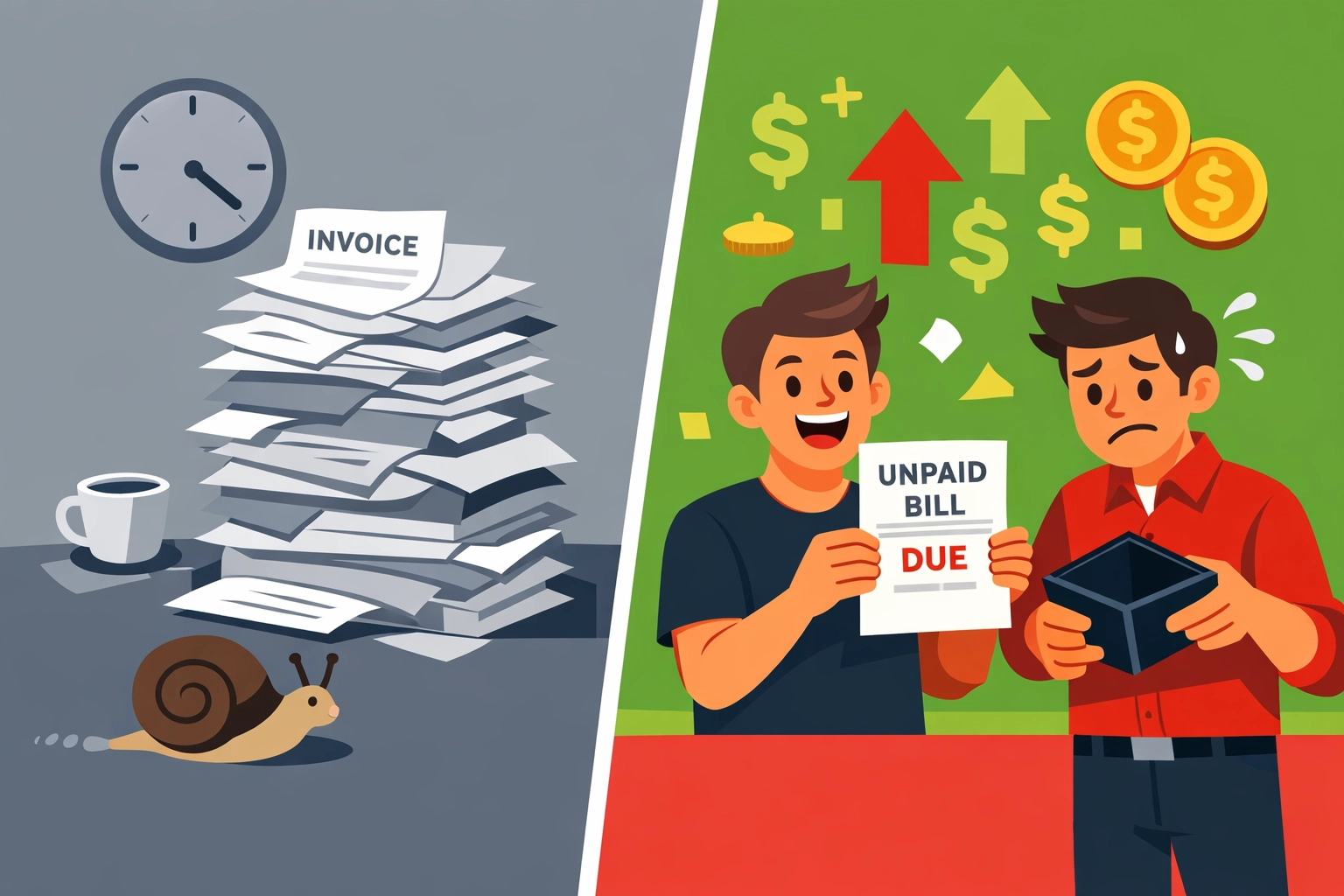
No real-time updates. No mobile access. No automation. Just you, manually entering the same customer info in four different places.
The real cost: Time is money. If you spend 5 hours per week managing spreadsheets that software could automate, that’s 260 hours per year. At $50/hour (what you could be billing), that’s $13,000 in opportunity cost.
Plus errors. One wrong number in your tax prep costs you real money with the IRS. One missed invoice costs you the whole job amount.
Mistake #6: Playing Phone Tag Instead of Communicating in Real-Time
Your tech needs to talk to the office. He calls. Nobody answers. He leaves a voicemail. Office calls back. He’s under a sink.
Meanwhile, the customer called with a question. Office has no idea what the tech found. Customer gets frustrated.
Manual communication means delays. Delays mean unhappy customers and techs making decisions without full information.
The real cost: Poor communication kills efficiency. If your techs waste 30 minutes per day on back-and-forth calls, that’s 125 hours per year per tech. That’s billable time you’re not collecting.
Customer satisfaction drops when they can’t get answers. Reviews suffer. Referrals dry up. You lose future business because your systems make you look scattered.
Mistake #7: Hunting Through Paper Files at Tax Time
It’s April. Your accountant needs Q1 numbers. You’re digging through file folders, old invoices, and receipt shoeboxes.
This happens because you never centralized your documents. Job notes are in one place. Invoices somewhere else. Expenses on random credit card statements.

Manual record-keeping turns tax prep into a nightmare. You either pay your accountant extra hours to sort through chaos, or you miss deductions because you can’t find receipts.
The real cost: Here’s where the $1,000+ really hits. Accountants charge $150-300/hour. If your disorganization adds 5-10 hours of their time, that’s $750-3,000 in extra fees.
Worse? Missed deductions. If you can’t prove expenses, you can’t write them off. Most plumbers miss $2,000-5,000 in legitimate deductions simply because records are scattered.
That’s real money the IRS is keeping because your systems are stuck in 1995.
The Simple Fix
Stop trying to run a 2026 plumbing business with 2005 tools.
You don’t need enterprise software that costs $500/month and requires a training manual. You need something that actually works for small trade businesses.
Real-time scheduling that prevents double bookings. Mobile access so techs see job details and inventory. Automated invoicing that gets you paid faster. Route optimization that cuts fuel costs. Centralized documents that make tax time painless.
At Valortek, we help plumbers (and other trade businesses) stop losing money to manual mistakes. We’re not another complicated enterprise platform. Just simple systems that plug the $1,000+ holes in your operation.
We’ve seen it happen over and over. Plumbers switch from spreadsheets to real software and suddenly they’re getting paid faster, booking more jobs per day, and keeping better records for tax time.
The math works. Fix these seven mistakes and you’ll find money you didn’t know you were losing.
Ready to stop bleeding cash? Let’s talk about what’s actually costing you money in your business.
Questions? Contact us – we’re happy to help you decide.
Ready to Transform Your Business?
See how Valortek can help you work smarter, not harder